


Need help?
+971 56 460 2001
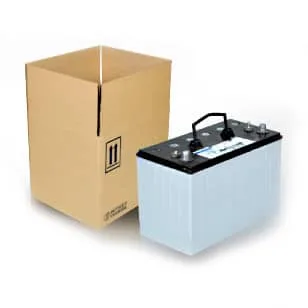
In today’s fast-evolving electronics and energy-storage sectors, batteries are no longer simple add-on components — they are the lifeline of consumer devices, EV systems, power tools, medical devices, UPS units, toys, and industrial equipment. As battery technology advances, so do the challenges of ensuring performance, safety, and durability. One of the biggest concerns across industries is thermal management, which can make or break the efficiency and safety of a battery system.
Surprisingly, thermal performance is not determined by the battery alone. Battery Packaging — the way a battery is enclosed, insulated, stored, and shipped — plays a critical role in how heat is controlled, dissipated, or prevented from accumulating. Whether it’s a small electronics battery or a large industrial cell, the packaging defines how well the battery can handle environmental stress, heat generation, physical impact, and long-term storage.
This in-depth article explores the science behind thermal behavior in batteries, why packaging matters, and how modern packaging solutions like those offered by Al Wasl Pack help manufacturers achieve safe, reliable, and optimized battery performance.
1. Why Thermal Management Is Critical in Battery Systems
All batteries generate heat. Whether during charging, discharging, storage, or transportation, chemical reactions inside the cell release thermal energy. When heat is not properly managed, it triggers a chain of problems:
This is where Battery Packaging becomes more than just a storage container — it becomes a thermal shield.
2. How Battery Packaging Influences Thermal Behavior
Effective Battery Packaging serves multiple thermal functions — insulating the cell, controlling heat exposure, and sometimes even providing cooling pathways. Below are key ways packaging influences thermal management.
2.1 Provides Thermal Insulation During Storage and Transport
Batteries are sensitive to temperature changes. Whether stored or shipped, they must be shielded from:
Proper packaging creates a controlled micro-environment around the battery, maintaining optimal temperature levels.
Examples include:
2.2 Prevents Heat Accumulation Through Proper Airflow and Spacing
Heat buildup worsens when batteries are packed too tightly. Good packaging ensures:
This is especially vital for lithium-ion batteries, which are prone to thermal instability when stacked closely.
2.3 Minimizes Impact and Compression, Which Can Trigger Heat Generation
Mechanical damage — punctures, crushing, or drops — can cause internal short circuits that generate heat. Quality Battery Packaging protects against:
Rigid cavity trays, impact-resistant polymers, and secure sealing all help reduce such risks.
2.4 Supports Thermal Dissipation in High-Heat Conditions
Some industrial batteries require packaging that promotes heat dissipation rather than retention. Packaging aids dissipation by:
Manufacturers can collaborate with Al Wasl Pack to customize packaging for specific thermal performance needs.
3. Material Selection in Battery Packaging: A Key Thermal Factor
Materials directly affect heat transfer. The right choice enhances safety; the wrong one increases risk. Common materials include:
For example, PET and PP resist external heat transfer effectively — ideal for consumer electronics and smaller battery systems.
4. Designing Battery Packaging for Optimal Thermal Management
Thermal design must be intentional, not an afterthought. Key design principles include:
4.1 Thermoformed Blister Trays with Thermal Buffers
The shape and depth of blister cavities influence heat distribution. Deep, individually sealed cavities isolate cells thermally.
4.2 Separation Layers to Prevent Heat Transfer
Inserts keep batteries apart, reducing risks of:
4.3 Shock-Absorbing Designs that Prevent Heat-Producing Damage
Multi-layer cushioning, thermoformed pockets, and shock-absorbing barriers minimize mechanical stress and heat generation.
4.4 Use of Heat-Reflective or UV-Protective Coatings
In hot climates like the GCC, reflective or UV-protective films reduce surface heating and extend battery safety.
4.5 Space for Airflow and Heat Dissipation
Smart packaging designs include air channels or spacing to prevent overheating during long storage periods.
5. How Al Wasl Pack Supports Better Thermal Management Through Advanced Battery Packaging
As a leading packaging manufacturer in the UAE, Al Wasl Pack specializes in high-precision thermoformed solutions for sensitive and high-risk products like batteries.
Through innovative Battery Packaging, Al Wasl Pack helps businesses maintain safety, meet compliance standards, and prevent costly thermal-related failures.
6. Future Trends: Smarter Thermal Solutions in Battery Packaging
As batteries evolve, packaging innovation will focus on smarter thermal control. Future trends include:
Packaging is becoming more intelligent — not just protective.
Conclusion
Thermal management is a cornerstone of battery performance and safety. While much focus goes to chemistry and device design, Battery Packaging plays an equally vital role in preventing overheating, enabling safe transport, and ensuring long-term reliability.
From insulation and shock resistance to ventilation and heat dissipation, packaging determines how batteries perform in real-world conditions.
For manufacturers seeking reliable, thermally optimized packaging solutions, Al Wasl Pack provides engineered, customizable, and compliant Battery Packaging that meets global safety standards and evolving industry needs.

Ajman, United Arab Emirates
+971 56 460 2001